Before buying an antique online, check five things: the piece itself (photos from every angle, an honest condition report, dimensions, period or style), the seller’s identity, whether the price makes sense, payment security, and the delivery and return terms. If you are a consumer buying from a professional based in the European Union, you will in principle have a 14-day right of withdrawal, which has its limits. Here is the checklist, point by point.
Photos: see everything, defects included
Online, you cannot touch the piece, turn it over or open its drawers: the photos have to do that for you. A serious listing shows:
- an overall view, then the sides and the back;
- the underside or reverse: the base of a porcelain piece, the stretcher of a painting, the inside of a piece of furniture;
- details and marks: signature, maker’s stamp, hallmarks, factory mark, labels;
- defects: chips, cracks, losses, restorations, wear.
A single flattering photo or an overly generic image should put you on guard: France’s Ministry of the Economy points out that a pixelated picture, or one obviously taken from a stock image bank, can be the sign of a fraudulent site. If an angle is missing, ask for it.
The description: condition, warts and all
The Ministry of the Economy advises not to rely on the photo alone and to read the description carefully. For an antique, it should at least state:
- what the object is and what it is made of, and the technique (oil on canvas, gilt bronze, faience, solid or veneered wood…);
- the period proposed and, where possible, the origin;
- the condition: restorations, wear, damage, replaced parts. An antique with no defect at all is rare; a listing that never mentions any deserves a question;
- the dimensions: height, width, depth, and for a painting, with and without the frame.
Measure the intended spot at home too, as well as the doors and stairs.
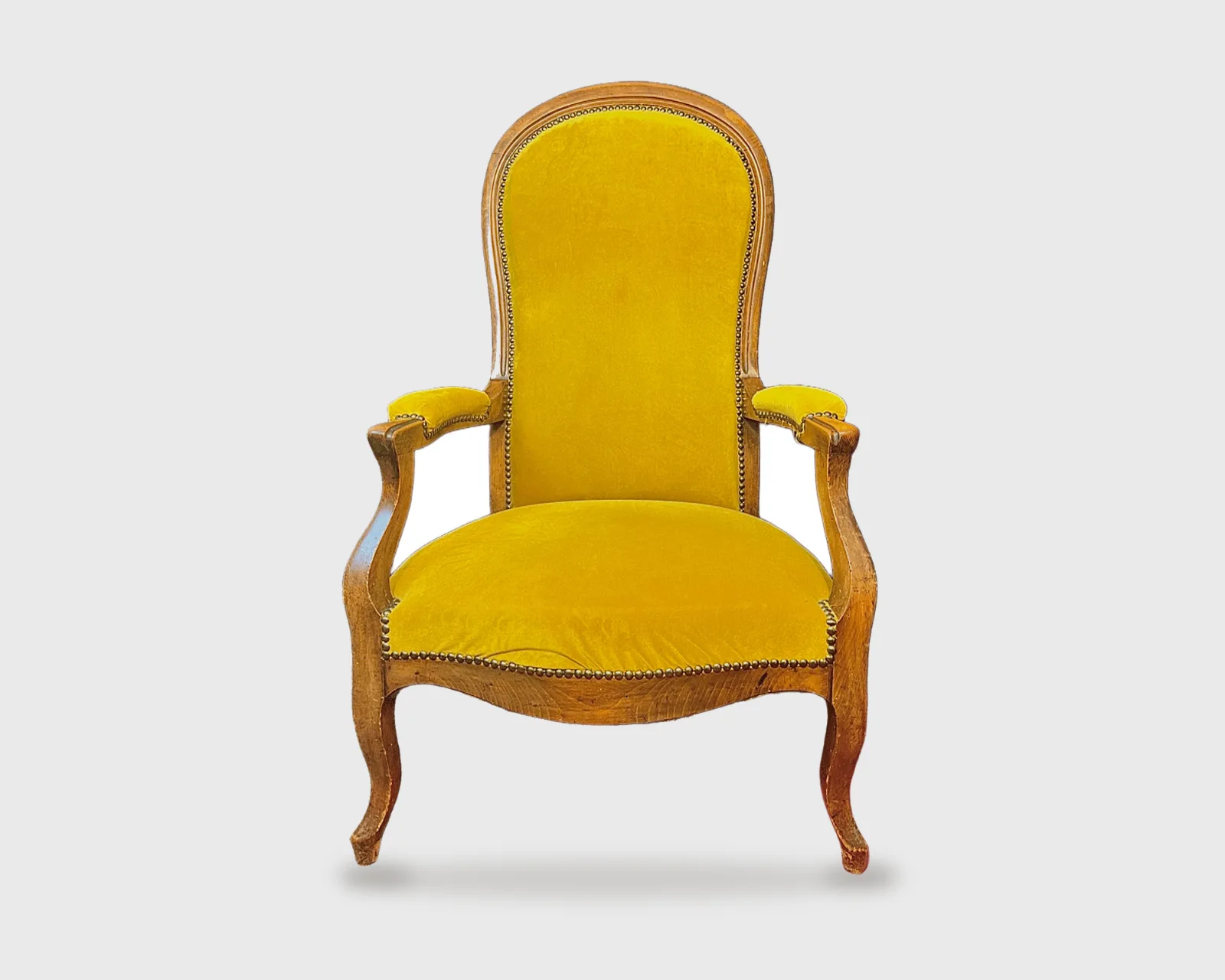
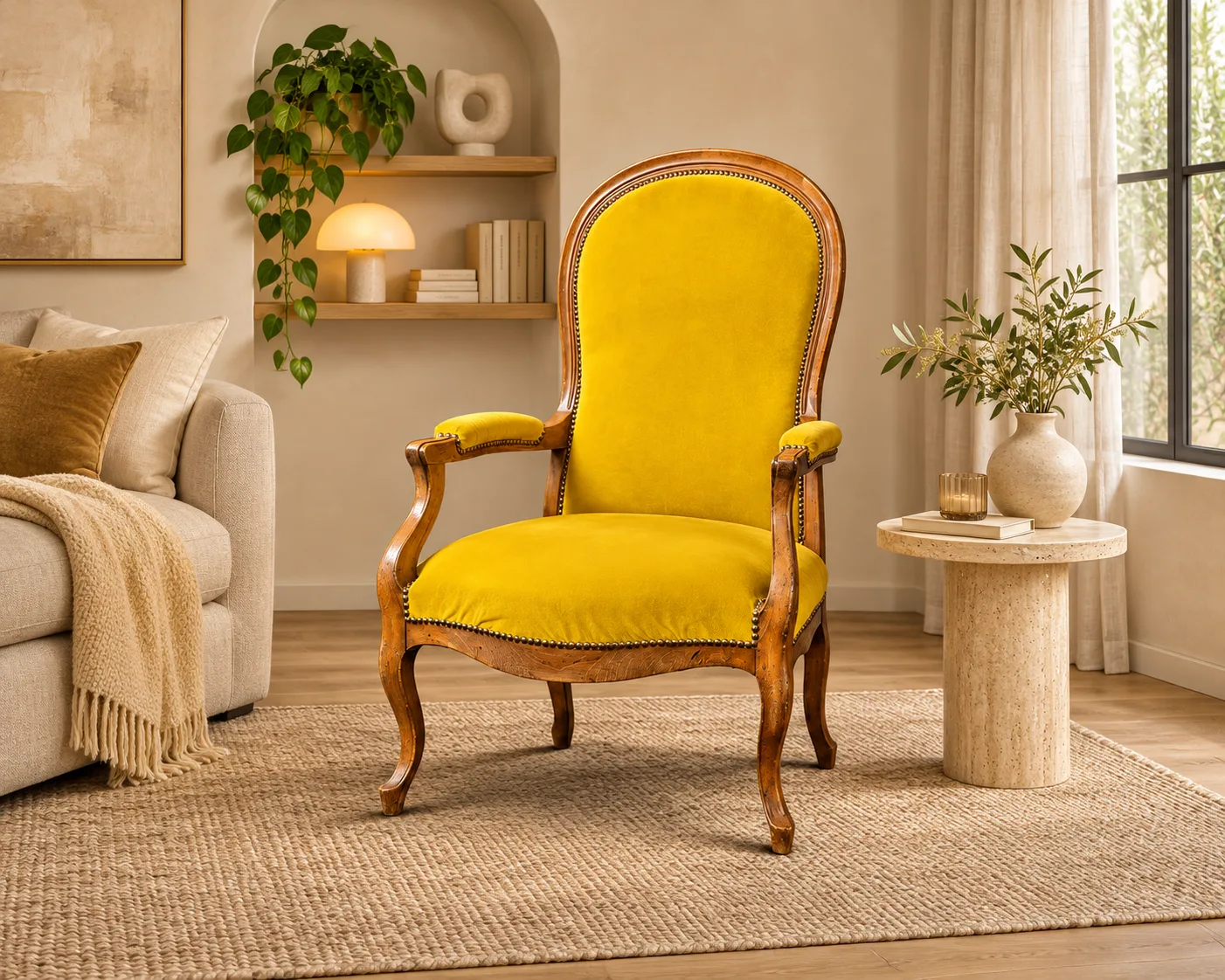
Take the example of a 19th-century “Voltaire” armchair: the words “fully restored” are not an admission, they are information. They tell you the chair is ready to use and that its upholstery is no longer original, which matters both for the price and for how you will use it.
Period or style: the word that changes everything
This is probably the decisive point for furniture and decorative arts. A period piece was made during the era it evokes; a piece in the style of that era borrows its forms later, sometimes much later. Both can be of fine quality, but their value is often in a different league.
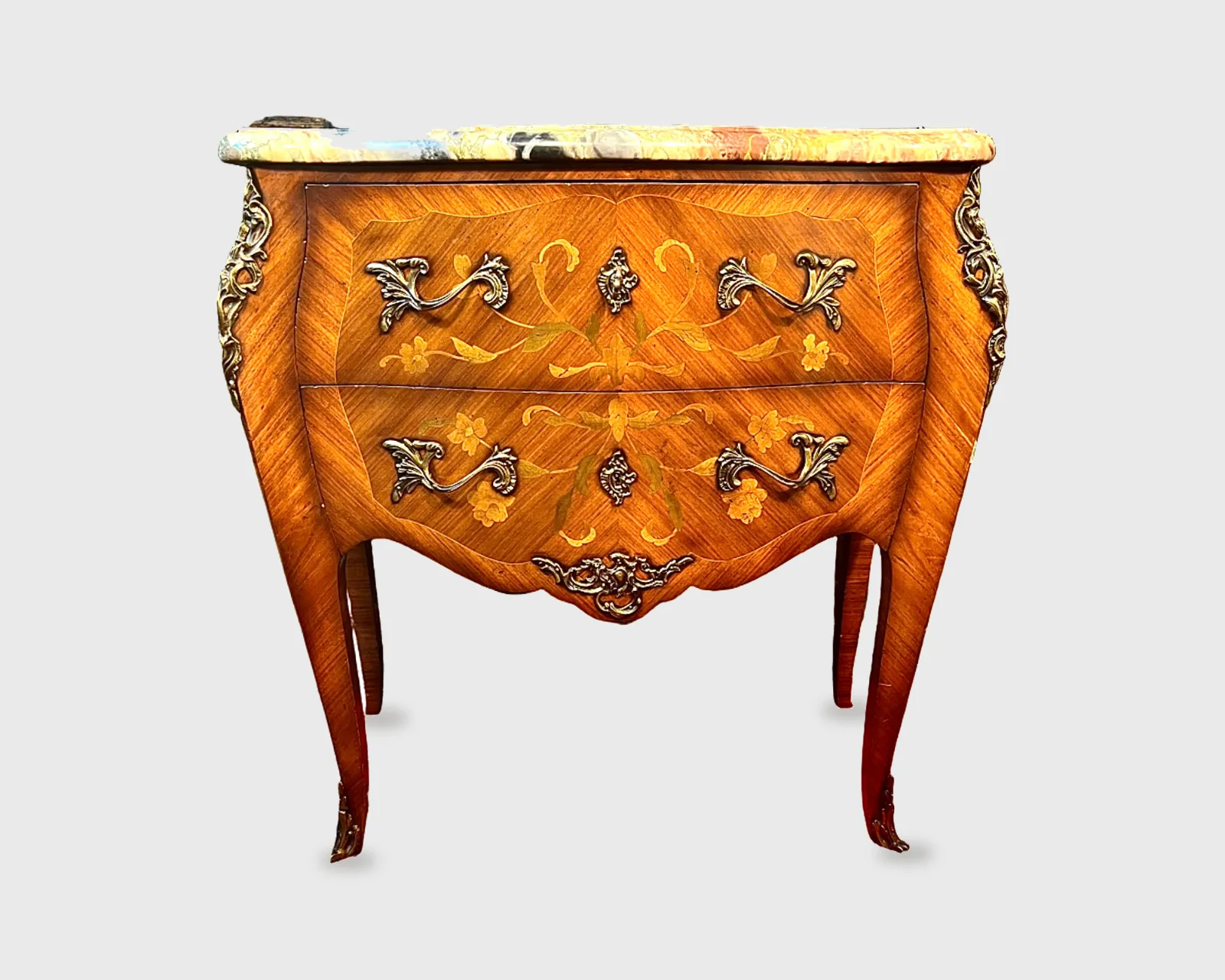
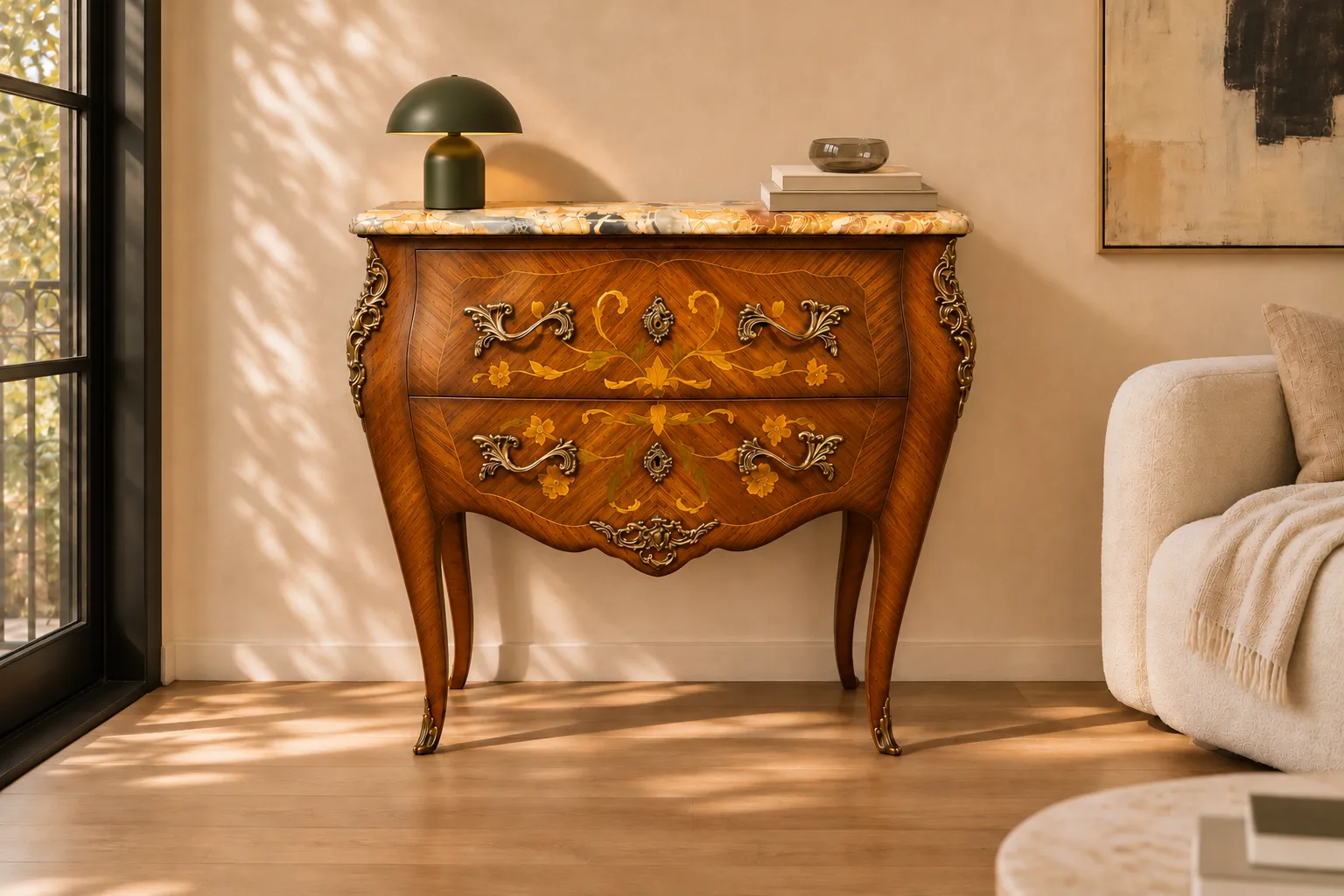
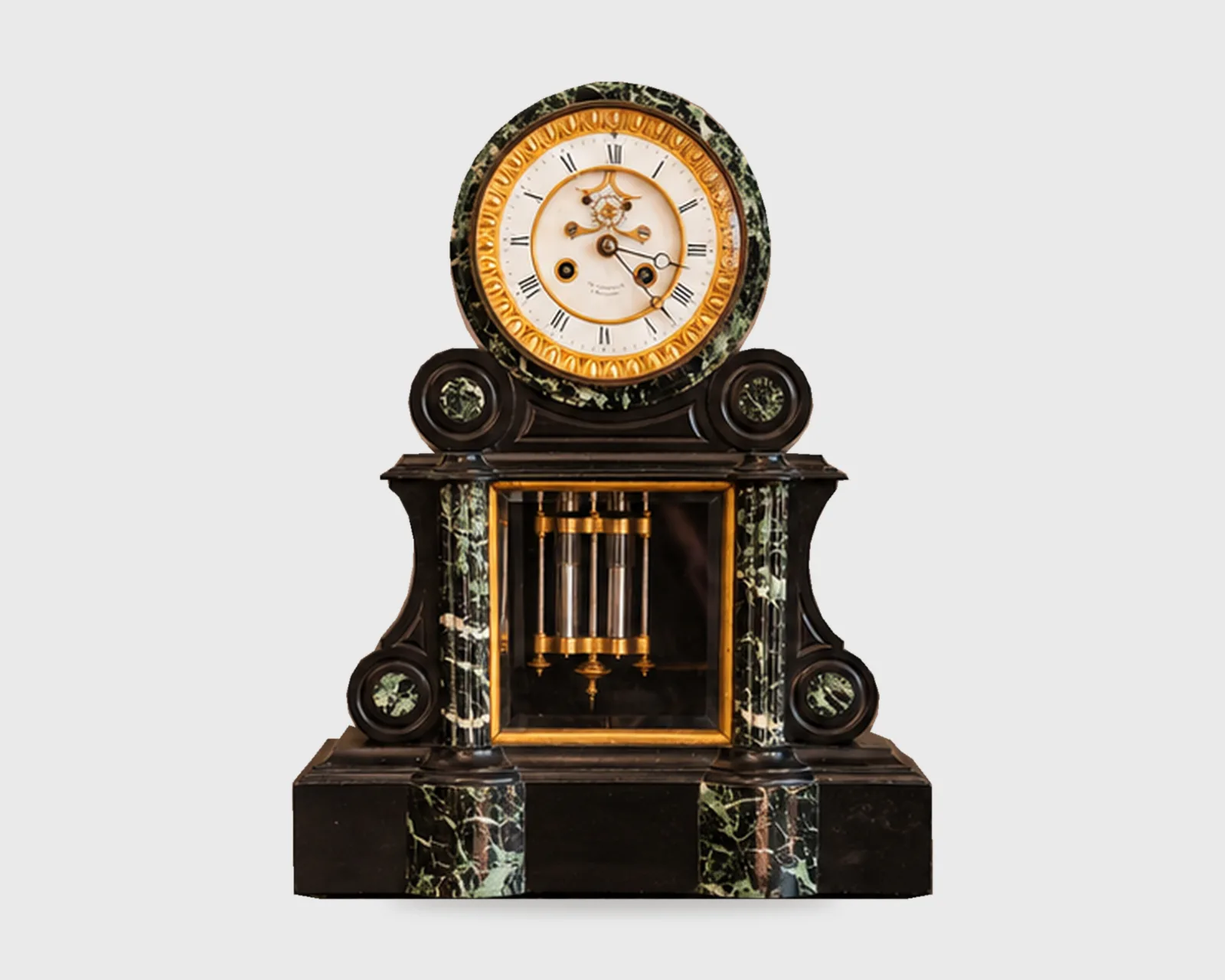
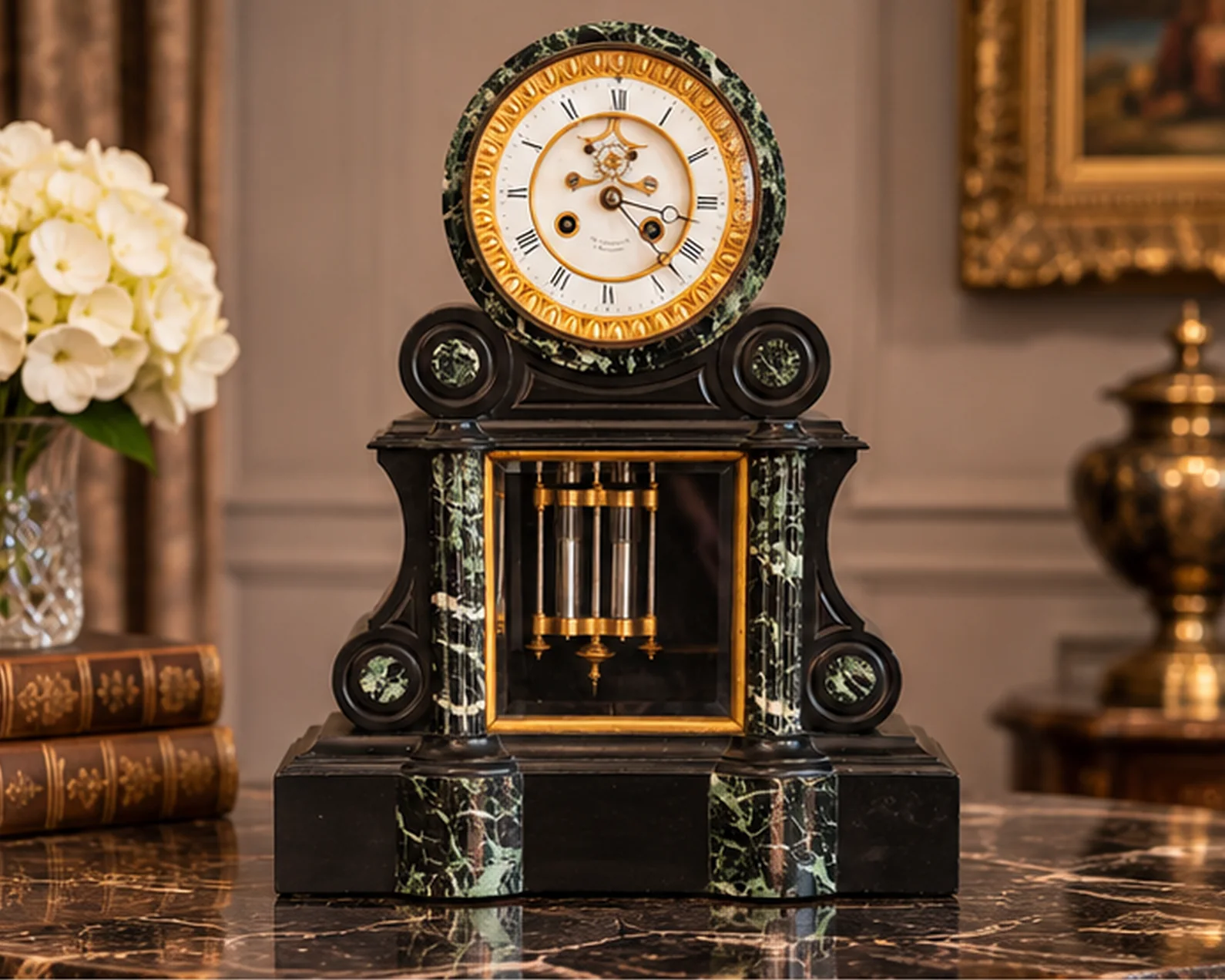
A gallery can offer both, as long as it says so. A Louis XV-style bombé marquetry commode is described as 20th-century work inspired by Louis XV; a Napoleon III black and green marble clock is presented as a period piece. If the listing is vague (“Louis XV”, with nothing more), ask in writing and keep the answer. The clues that help you decide are set out in our article on the Louis XV commode, period or style.
Signatures, marks and certificates
A signature, a stamp or a hallmark is a clue, not proof: a signature can be apocryphal, a mark imitated. What counts is the consistency of the whole and the commitment the seller makes to their description.
A certificate of authenticity is only worth as much as the person who signs it. Ask who issues it, exactly what it states (the maker, the period, the material?) and whether it comes with the piece. A detailed invoice from a professional, stating the period, material and condition, is also a valuable document. For an important piece, an independent opinion is still the best reflex: our valuation page, for instance, lets you submit photos to an expert.
Who is selling? Identifying a professional
In France, websites are required to publish legal notices (mentions légales), the Ministry of the Economy points out: they let you check the seller’s official name, company name, physical address and contact details. Before you buy:
- read the legal notices and the terms and conditions of sale; vague or overly generic wording should put you on guard;
- look for a real address, a registration number (SIRET or RCS for a French business), and a phone number and email address that get answered;
- type the site’s name into a search engine, perhaps followed by the word “scam”, as France’s consumer protection authority, the DGCCRF, recommends;
- take reviews with a pinch of salt and favour independent review platforms that moderate comments.
Knowing who is selling also matters for your rights. The European Your Europe portal points out that the right of withdrawal does not apply to purchases from private individuals, and advises checking this on online marketplaces. The French ministry also recommends favouring a French or European site: outside the European Union, the same rights are not guaranteed. And a domain name ending in “.fr” does not prove that the publisher is French; only the legal notices tell you that.
The price: compare like with like
A price far below that of equivalent pieces is not a bargain, it is a question. The Ministry of the Economy warns against offers that look too good to be true and advises comparing not only the price but also the delivery time, extra charges and guarantees.
Compare genuinely comparable pieces: same period (not “style”), same material, same condition, similar dimensions. And ask for the total price delivered to your door: shipping, packing, insurance and, outside the European Union, customs duties and taxes may be added.
Payment: secure, traceable, never under pressure
This is where most scams play out.
- Pay on a secure page (“https” and a padlock). France’s Institut national de la consommation (INC) notes that this secures the connection but does not, on its own, guarantee that the site is trustworthy.
- Favour a bank card with strong authentication, such as a code received by text message or approval in your bank’s app, as the Ministry of the Economy recommends.
- Be wary of a bank transfer requested by a stranger. The Banque de France advises that, before a first transfer to a new payee, you confirm their bank details by calling them on a number you already know, and that you be wary of “urgent” requests.
- Never share your codes: according to the Banque de France, your bank never asks you for a code, password or login.
- Paying in instalments is offered by a third-party provider, subject to approval: read its terms before you commit.
- Keep the evidence: a screenshot of the listing, the order confirmation, the invoice, your exchanges with the seller.
In case of fraud, the Banque de France advises blocking your card or account with your bank immediately, then reporting the facts; in France, online card fraud is reported on the Perceval platform. Elsewhere, ask your bank about the procedure in your country.
Packing, transport, insurance
A badly packed antique can lose much of its value in a single journey. Before you buy, ask:
- who packs it and how: foam, double boxing, a made-to-measure crate for a fragile or heavy piece;
- which carrier: a parcel service suits a small, well-protected object, but a piece of furniture, a sculpture or a large mirror calls for a carrier used to works of art;
- what insurance: at the real value of the piece, not the carrier’s minimum flat rate;
- what lead time and tracking: a tracking number, delivery against signature.
The 14-day right of withdrawal, and its limits
When you buy at a distance from a trader, as a consumer in the European Union, EU law gives you 14 days to change your mind, without having to give a reason. According to Service-public.fr, the French government’s official information site, the period runs from the day after you receive the item, and it also applies to second-hand goods. Its limits matter just as much:
- it does not apply between private individuals, as Your Europe points out;
- nor, under French rules, to public auctions, according to Service-public.fr, nor to made-to-measure goods;
- sending the item back is not enough: you must notify the seller of your decision, in writing or with the withdrawal form, before the deadline, and be able to prove it;
- return costs are generally borne by the buyer, unless the seller covers them or did not inform you of them. For furniture they can be high: find out before you buy;
- the refund is made within 14 days of your notification, though the seller may wait until they have recovered the item or received proof that you have sent it.
Outside the European Union, the rules depend on the seller’s country and on your own: read the terms of sale carefully.
On delivery: check before you sign
The INC advises examining the packaging before signing the delivery slip and noting any damage on it; according to the INC, the phrase “subject to unpacking” has no legal value in France. In practice:
- inspect the parcel in front of the delivery driver;
- if there is damage, write precise reservations on the slip (“front left corner crushed” rather than “parcel damaged”) and refuse the parcel if the damage is serious;
- photograph the packaging, the unpacking and the object;
- tell the seller straight away, with photos, within the time limit set in their terms of sale;
- in France, confirm your reservations to the carrier by registered letter within three days, as the INC indicates.
Finally, check that the object matches the description: dimensions, condition, certificate if one was promised.
The most common scams
- The fake online shop: rock-bottom prices, no legal notices, no real customer service, trust badges that cannot be clicked, pressing messages (“Act now”), all warning signs listed by the Ministry of the Economy.
- The seller who wants to leave the platform: on peer-to-peer sites, the INC advises staying on the platform and using its payment system.
- The “urgent” transfer to a stranger to “reserve” a piece.
- Fake payment or tracking links received by text message or email.
If you fall victim, the INC advises disputing the payment with your bank immediately and, in France, reporting it on SignalConso.
How Selennia handles these questions
Selennia is a gallery of antiques and works of art at 1 rue du Pont Vieux in Nice. Here is how we deal with each of these points; the details are in our terms and conditions of sale.
- Seeing the piece before you buy: the gallery can be visited by appointment, and you will also find us on Mondays at the cours Saleya flea market. The pieces presented online can be seen in Nice, and we are happy to send extra photos or details.
- The description: period or style, material, dimensions, signature, condition, restorations and defects are given on every listing. A certificate of authenticity can be provided on request, subject to conditions, depending on the piece.
- Payment is made on the site, secured by Stripe: bank card, Apple Pay or Google Pay, or payment in instalments with Klarna, depending on the amount and your eligibility. We never have access to your bank details.
- Delivery is insured at the value of the piece, in France and worldwide, to a relay point or to your home against signature, with careful packing. For paintings by listed artists, sculptures, mirrors and furniture, a free quote is sent to you before any payment, and the piece is reserved for you during the quote. Collection in Nice is free, by appointment.
- Withdrawal: you have 14 days from receipt; the object is returned in perfect condition, in its original packaging, with return costs at your expense.
A question before buying? Write to us from the contact page or read our frequently asked questions. And if you are on the other side of the transaction, read our guide to selling an antique.
Frequently asked questions
Can I withdraw after buying an antique online? In principle yes, if you bought it as a consumer from a professional based in the European Union: you have 14 days from receipt. This right does not apply to purchases between private individuals, nor, according to Service-public.fr, to public auctions. Outside the EU, check the seller’s terms.
What should I do if the parcel arrives damaged? Write precise reservations on the delivery slip before signing, refuse the parcel if the damage is serious, photograph everything and tell the seller at once.
In short
Buying an antique online is above all a matter of taking your time: complete photos, an honest condition report, period distinguished from style, an identifiable seller, a consistent price, secure payment and insured delivery. If in any doubt, ask in writing, and keep the answer.