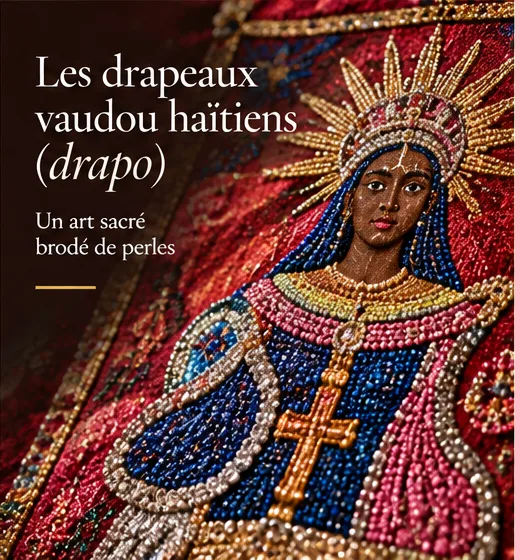
A Haitian Vodou flag, or drapo in Haitian Creole, is a ritual banner covered in sequins and beads sewn by hand onto a ground of satin, velvet or rayon. Each drapo is usually dedicated to a spirit of Vodou, a lwa, whose colours and symbols it carries, and it is presented at the start of ceremonies to honour the spirits. Since the mid-20th century these banners have also become an art form in their own right, collected and exhibited by museums.
Vodou is a living religion, practised in Haiti and across its diaspora. This article presents drapo as museums and scholars describe them, with the respect owed to objects that remain sacred for many believers.
A ritual object at the heart of the temple
According to the Fowler Museum at the University of California, Los Angeles (UCLA), which holds more than 120 Vodou flags, drapo are the most celebrated genre of Vodou sacred art. They are presented at the beginning of ceremonies to honour the spirits and to gather the energy of the faithful. The museum also counts them among the most sacred and costly ritual objects in a temple: they are used in initiations, invocations of the lwa and pilgrimages, and most Vodou temples or societies own at least two, representing both the congregation and the divinities it serves.
Ceremonial flags, known as drapo servis, are kept in the shrine rooms and carried by flag bearers in the temple’s main chamber. They are often made in pairs, for instance for Ogou and Danbala. Their classic format is roughly 90 centimetres square (about 36 inches), with a central image set within a diamond-shaped border, often finished with a fringe.
Lwa and vèvè: what a drapo shows
A drapo generally depicts a lwa in one of two ways: as a Catholic saint with whom the spirit is associated, or as a vèvè. A vèvè is a traced emblem specific to each spirit: Agwé’s ship, Baron Samedi’s cemetery cross and Legba’s crossroads are examples. It represents the lwa symbolically and, in Vodou thought, opens a gateway for it into the human world.
The Fowler Museum points out that drapo designs combine symbols of African origin with European models: Catholic processional banners, French military ensigns and Masonic imagery. A drapo in the museum’s collection dedicated to Papa Gede shows him as an undertaker, in a top hat with a cross in his hand: a spirit associated with death and resurrection, he is tasked with bringing the spirits of the dead to Ginen, the realm of the ancestors. In 2004 the museum devoted an exhibition, ‘Saluting Vodou Spirits’, to several dozen flags from its collection, dating from the early 20th century to the 1990s, with a focus on Ogou, Danbala and Ezili Danto, spirits linked to the Haitian Revolution (1791–1804).
La Sirène (Lasirèn), spirit of the waters
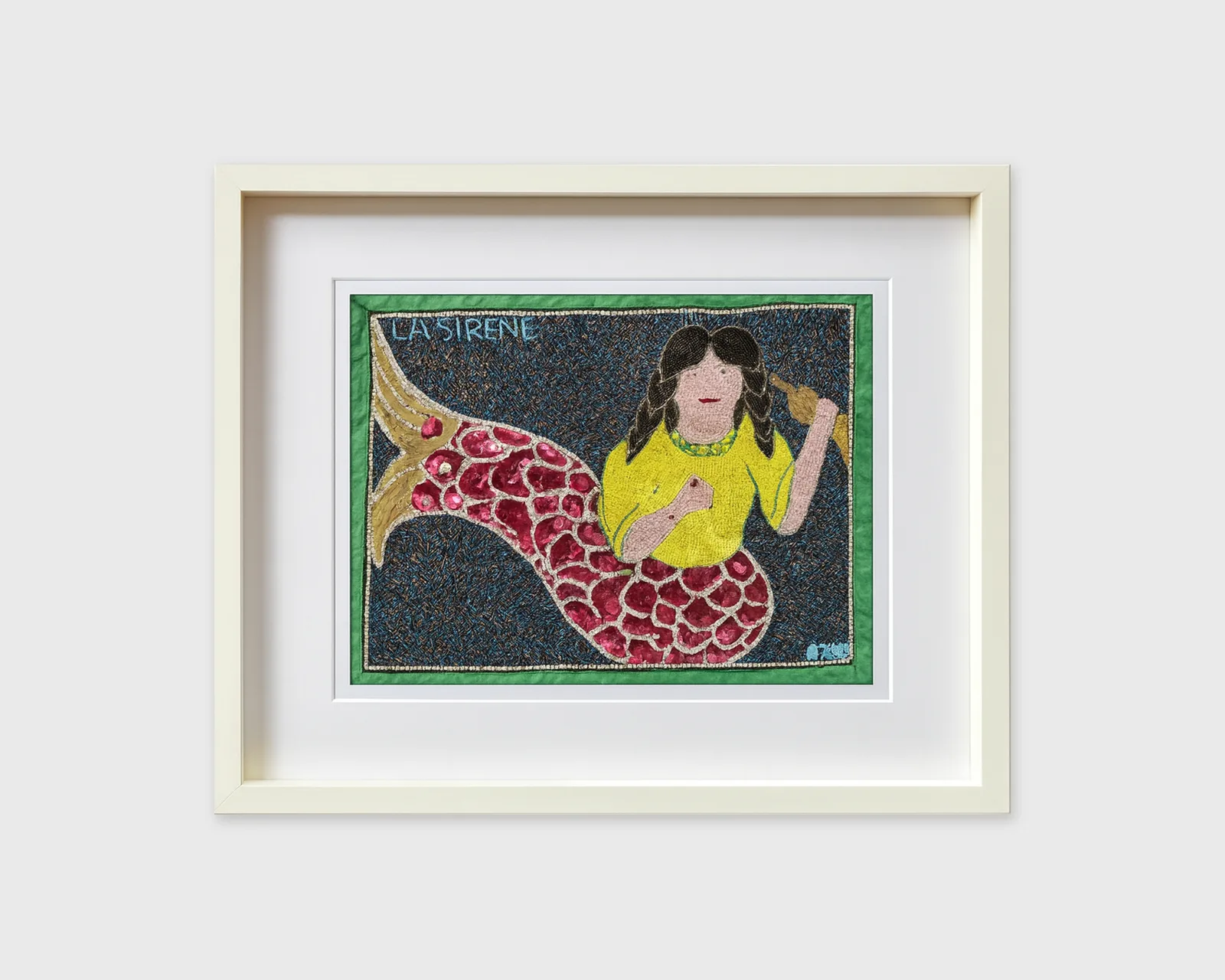
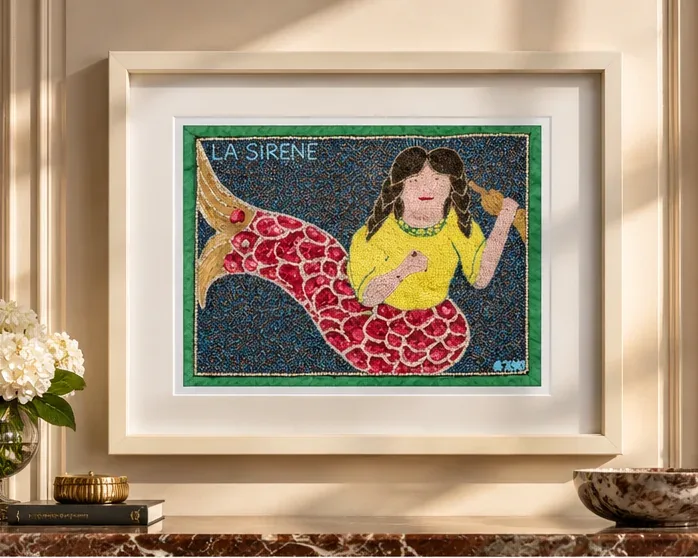
La Sirène, Lasirèn in Creole, is a lwa of the waters. The entry for a flag dedicated to her, published by Duke University’s Sacred Arts of the Black Atlantic project, describes her as the wife of Agwé, spirit of the sea, goddess of the ocean depths and of music, ‘mother of fish’. She is said to be very powerful, able to steal people away to her ocean domain, and her waters are seen as the source of all knowledge. She is often shown as a mermaid; on this flag a light-blue satin border evokes her watery nature.
The same entry is a reminder that the line between ritual object and work of art remains porous: the flag, probably made for export, was later used in Vodou ceremonies in the United States.
Sequins, beads and satin: the technique
Drapo are made of satin, velvet or rayon and decorated with sequins, beads or appliqué. The oldest, from the 19th and early 20th centuries, combined one or two coloured fabrics, embroidery, small pieces of metal and glass beads, with the image of the lwa sewn on in appliqué.
The sequin, now inseparable from the genre, is a 20th-century introduction attributed to the artist Joseph Fortine. In 1940, after seeing Afro-Brazilian samba dancers in sequinned costumes, he began decorating the costumes of rara bands with sequins; in 1943 he made a sequinned flag for Danbala, stretched on a burlap coffee sack mounted on a wooden frame, with lines of sequins on a satin ground. On more recent flags the field is often entirely covered in sequins of a single colour or in geometric patterns.
A flag by Clotaire Bazile from around 1974, in the Lowe Art Museum at the University of Miami, sums up the technique well: satin, glass beads, plastic beads, sequins and a printed image, depicting Erzulie Freda and Danbala Wedo.
From the temple to the museum
In the 1950s collectors began buying drapo, and Vodou priests (oungan) started making them for sale as a source of income. Demand from tourists and collectors has grown steadily ever since. A distinction has since been drawn between drapo servis, made for ritual, and flags made for sale, which Port-au-Prince artists sell to tourists and galleries.
Museum recognition followed. In October 1995 the Fowler Museum opened ‘The Sacred Arts of Haitian Vodou’, a major exhibition conceived by Donald J. Cosentino, accompanied by a book bringing together sixteen essays by scholars, artists and ritual specialists. The museum has since devoted further exhibitions to drapo, from ‘Saluting Vodou Spirits’ in 2004 to its Myrlande Constant retrospective in 2023.
A few artists to know
- Joseph Fortine, credited with introducing sequins in the 1940s; he trained several artists, including Clotaire Bazile, Sylva Joseph, Edgard Jean Louis and Yves Telemak, the youngest of whom, Telemak, was the first to sign his work.
- Clotaire Bazile, one of whose flags from the 1970s is held by the Lowe Art Museum at the University of Miami.
- Antoine Oleyant (1955–1992), born in Plaisance du Sud, who turned to the drapo in the early 1980s and helped move it from craft to fine art; the Fowler Museum holds his Danbala flag.
- Myrlande Constant, who taught herself the art of the drapo and brought new themes and techniques to it, favouring beads over sequins. Her beaded tapestries depict Haitians, Catholic saints and lwa in scenes of history and daily life. In 2023 the Fowler Museum devoted the retrospective ‘The Work of Radiance’ to her, presented as the first solo exhibition dedicated to a Haitian female contemporary artist at an American museum.
Looking at and choosing a drapo today
A few pointers help in reading a drapo:
- The spirit depicted: an inscribed name, the colours, the attributes or the vèvè often identify the lwa.
- The signature: Yves Telemak is regarded as the first to have signed his flags; an embroidered signature identifies the artist, but does not tell the whole story of the work’s date or use.
- The presentation: framing under glass protects the embroidery from dust and handling.
- Respect for the object: a drapo remains bound to a religion practised today; seeing it as a work of art does not erase its sacred dimension.
For any question about a piece, its subject or its presentation, our expertise service is at your disposal.
Frequently asked questions
What is a drapo? It is the Haitian Creole name for Haitian Vodou flags: banners of satin, velvet or rayon covered in hand-sewn sequins and beads, usually dedicated to a lwa and presented at the start of ceremonies to honour the spirits.
What is the difference between a ceremonial flag and an art flag? The drapo servis is made for ritual: it is kept in the temple and carried during ceremonies. Since the 1950s flags have also been made for sale to collectors and galleries; they draw on the iconography of the lwa, often in freer formats and compositions.
Who is La Sirène in Vodou? Lasirèn is a lwa of the waters, wife of Agwé, spirit of the sea. Goddess of the deep ocean and of music, she is often depicted as a mermaid.
Why are Vodou flags covered in sequins? The earliest flags were mainly embroidered and decorated with glass beads and small pieces of metal. Sequins were introduced from 1940 onwards, an innovation attributed to Joseph Fortine, and became the visual signature of the genre.
Where can I see Vodou flags in a museum? The Fowler Museum at UCLA in Los Angeles holds more than 120. The Lowe Art Museum at the University of Miami holds a flag by Clotaire Bazile (around 1974), and Duke University’s Sacred Arts of the Black Atlantic project documents online a flag dedicated to Lasirèn.
Drapo in the gallery
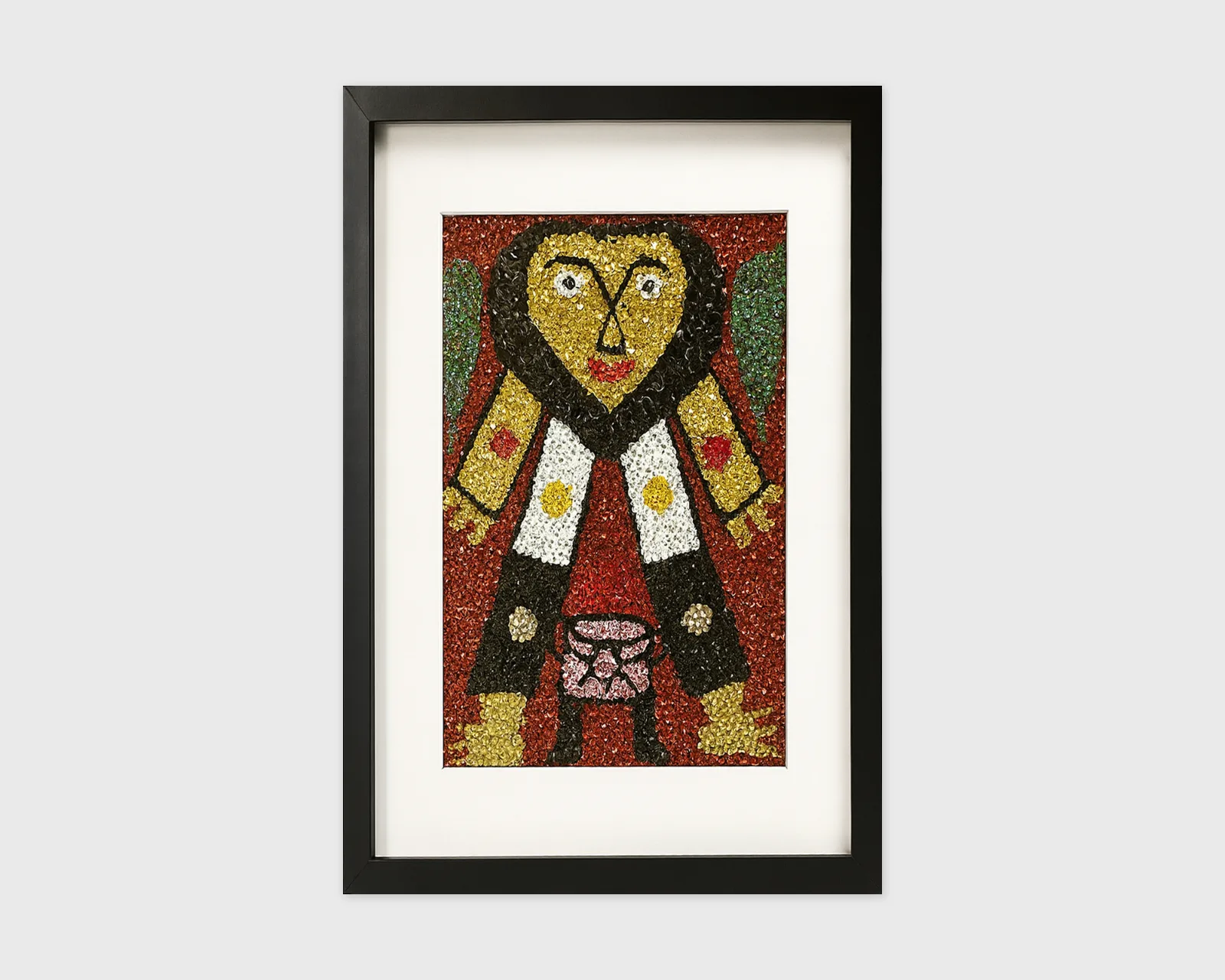
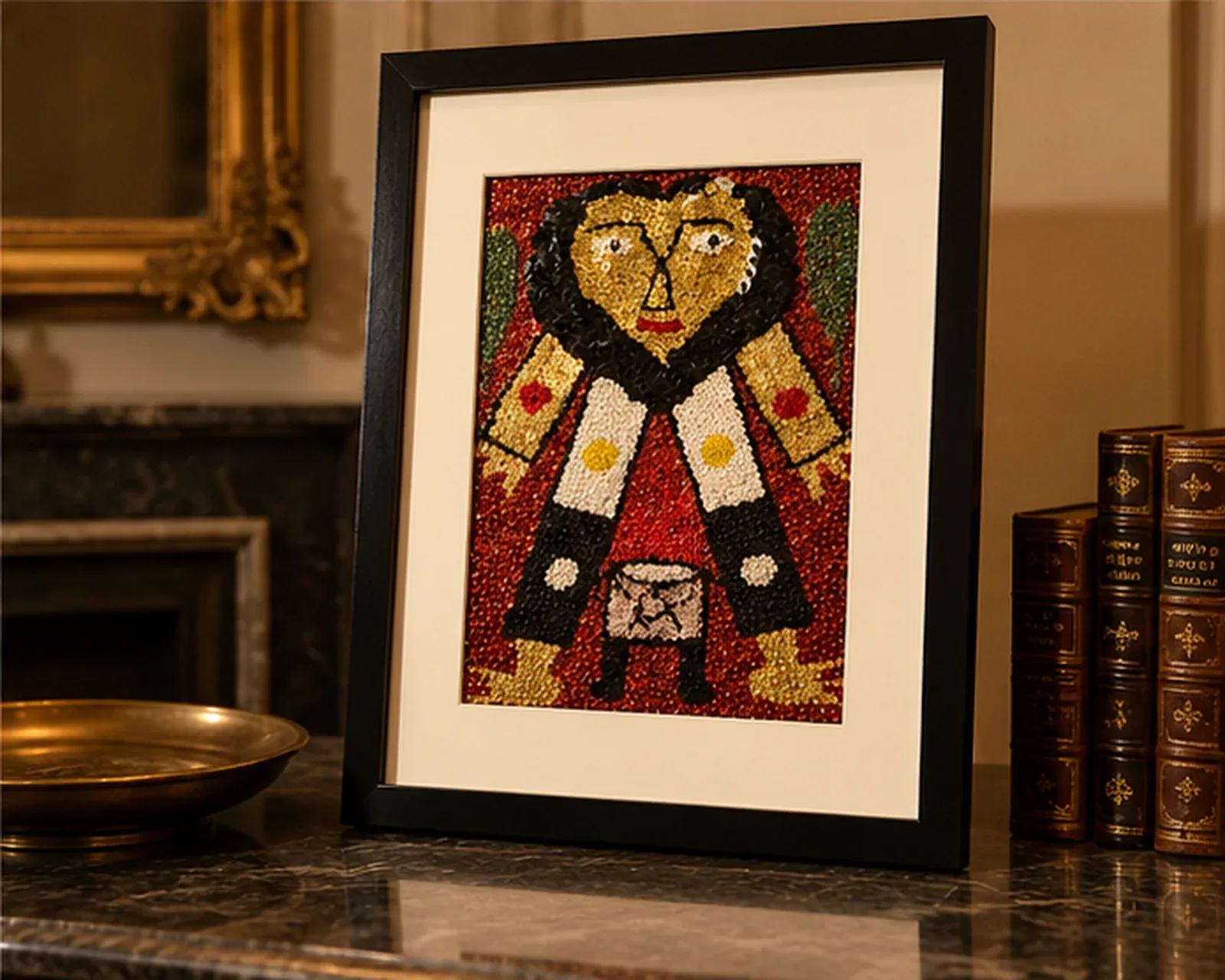
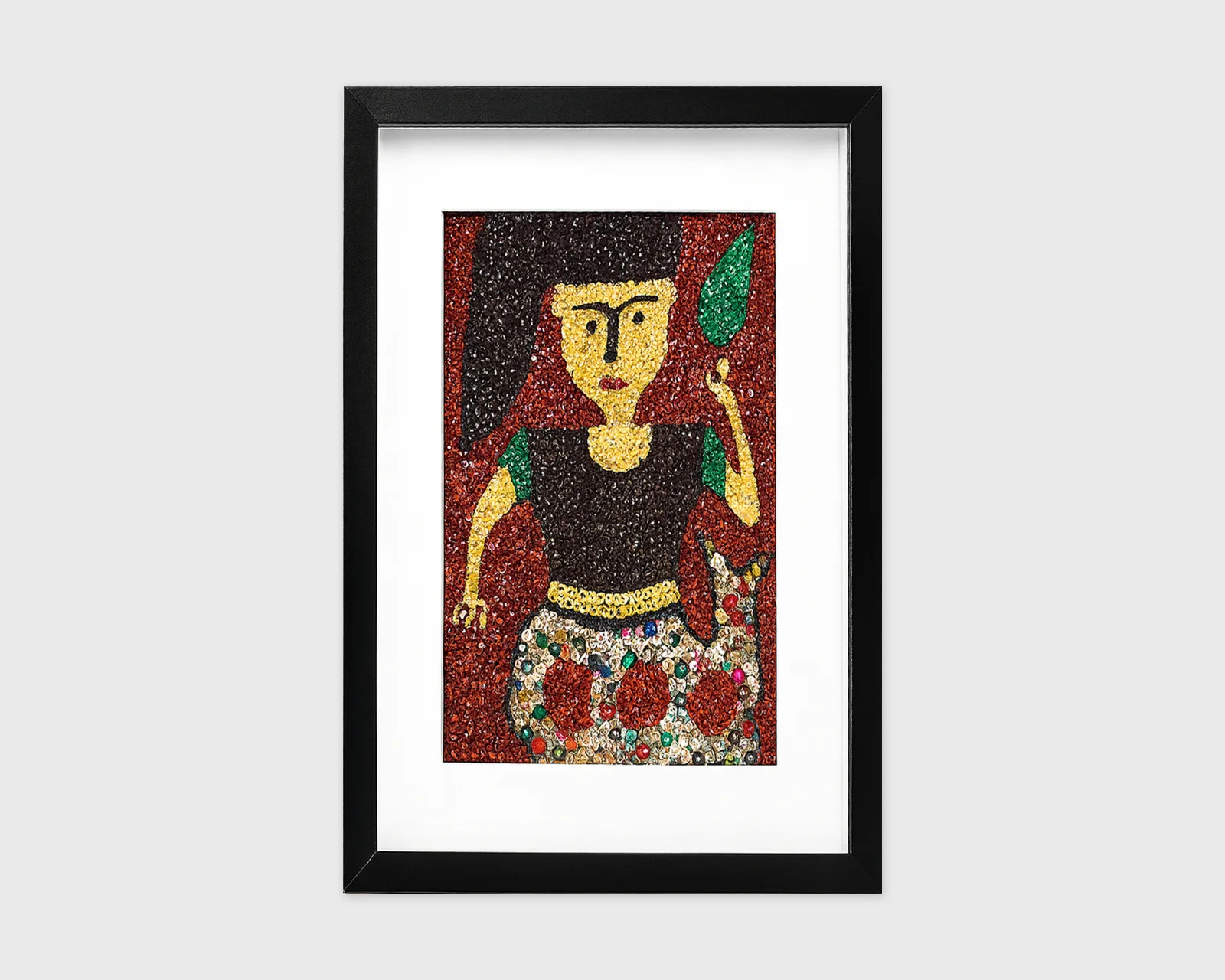
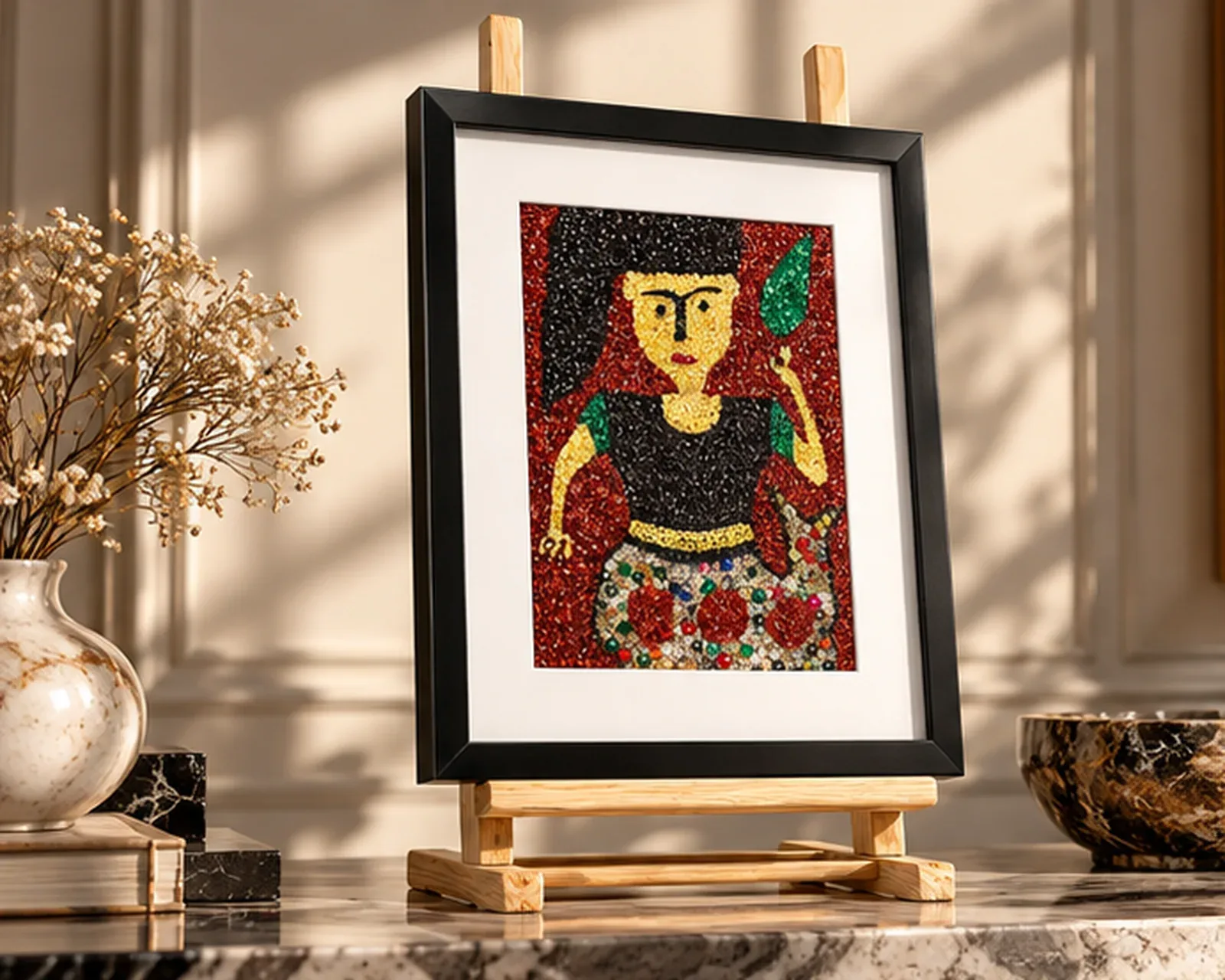
Three Haitian Vodou flags are presented in our decorative arts. The ‘La Sirène’ flag, signed AZOR, shows Lasirèn with braided hair and a pink fish tail on a midnight-blue beaded ground within a green border; its description links the signature to Roudy Azor, who trained in the workshop of Myrlande Constant. The beaded flag with a stylised figure presents a frontal figure with a heart-shaped face in yellow, black, red and green beads and sequins, in a mount. The framed ritual figure shows a female figure in a rose-patterned dress on a ground of red beads, presented under glass.
Looking for a particular drapo, or would you like an opinion on a piece you own? Contact our expertise service or entrust us with a bespoke search.